

Begin with your goal. Are you learning the game, replacing a worn component or creating a permanent practice area? Write down what you already own and what you want to change. That simple starting point keeps the shopping list relevant and makes compatibility questions easier to identify.
Understand the parts of a dart
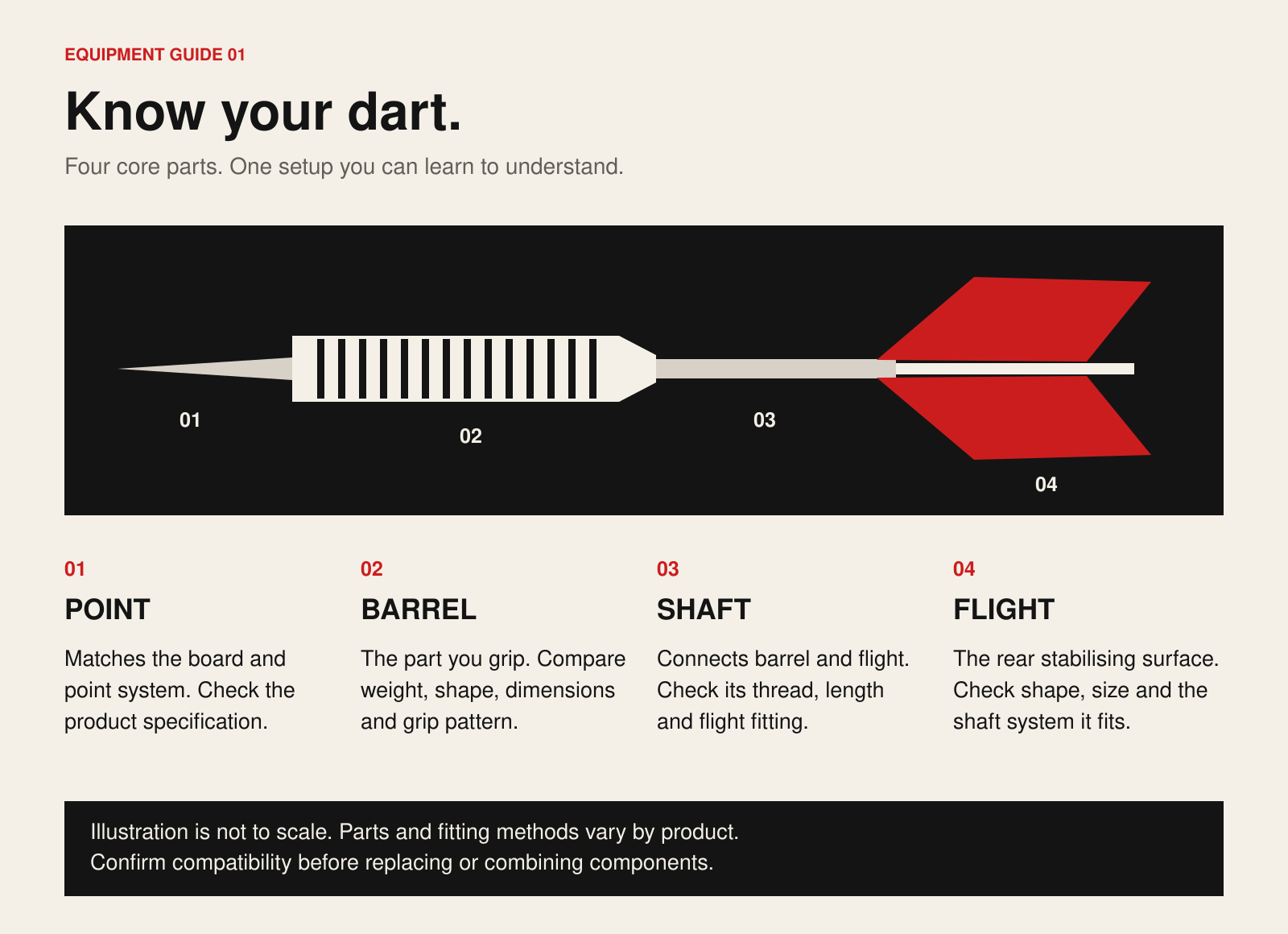
A conventional dart has a point, barrel, shaft and flight. The barrel is the section held during the throw. The shaft connects the rear of the barrel to the flight, while the flight forms the finned section at the back. Some systems combine components or use specialised connections, so always check the particular model.
When comparing darts, look beyond the colour. Notice the barrel shape, grip layout, listed weight and included parts. Keep those details together when building a shortlist. A useful comparison explains the difference between models instead of treating every set at the same weight as equivalent.
YOUR EQUIPMENT CHECKLIST
Separate preferences from compatibility
Some choices are personal preferences, such as how a barrel feels in your hand. Others are compatibility requirements, such as whether a shaft connects correctly to a barrel or whether a light fits the selected board arrangement. Identify the requirements first so you do not shortlist products that cannot work together.
Plan the board and the room together
Choose the board with the intended dart type and playing environment in mind. Then consider where it will sit, how it will be mounted and how the throwing area will remain clear. A room layout should account for people walking past, waiting to play and retrieving darts, not only the distance between board and throw line.
Our dart board mounting guide explains the standard steel-tip measurements. Use the instructions supplied with your own equipment for its mounting system. Before purchasing a cabinet, surround or light, compare the dimensions and fitting requirements with the selected board and available space.
Build a useful accessory checklist
Divide accessories into three groups: items needed to complete the setup, replacement parts for regular use and optional additions. This helps you decide what to buy now and what can wait. It also makes package comparisons clearer because you can see which items genuinely fill a gap.
Consider storage, scoring, lighting and protection individually. A case is useful only if its internal arrangement suits the equipment you want to carry. A scoring surface needs a practical position. A mat or surround covers a defined area and should be selected with its actual dimensions and intended use in mind.
Compare packages item by item
A package can make a new setup easier to organise, but the name or hero image is not a complete contents list. Check which board and accessories are included, the model of each significant item and whether mounting components or other extras need to be purchased separately.
Compare the package against the equipment you already own. Buying a duplicate item may not add value, while a missing component can delay using the setup. If two packages appear similar, ask about the exact differences rather than assuming that a higher price means every component has been upgraded.
Keep a record for future replacements
Save model names, selected variants and clear photographs of your setup. Include the weight of your darts and the shaft and flight combination you prefer. For room equipment, keep the board model and accessory details together. This record makes a future replacement enquiry more precise.
What should a beginner buy first?
Start with the equipment required to play in a suitable space and keep the choices understandable. A first purchase should give you a reference point for learning. You can compare more specialised options after you know what you would like to change.
Can equipment changes replace practice?
Equipment can change the feel or suitability of a setup, but it does not guarantee a particular score. Use consistent practice and careful comparison to judge whether a change helps you. Avoid changing several variables and then attributing the result to one component.
Where should I ask about an uncertain detail?
Send the product link, your current model and the question through our contact page. A photograph is helpful when identifying a part. Explain the practical result you need so the enquiry focuses on the relevant specification.