
This guide explains the standard steel-tip measurements and the planning checks that go with them. Follow the instructions supplied with your particular board, bracket or stand. Electronic and soft-tip systems, accessible arrangements and specific competition formats may have different requirements, so confirm the rules and equipment guidance relevant to your game.
Set the height from the playing floor
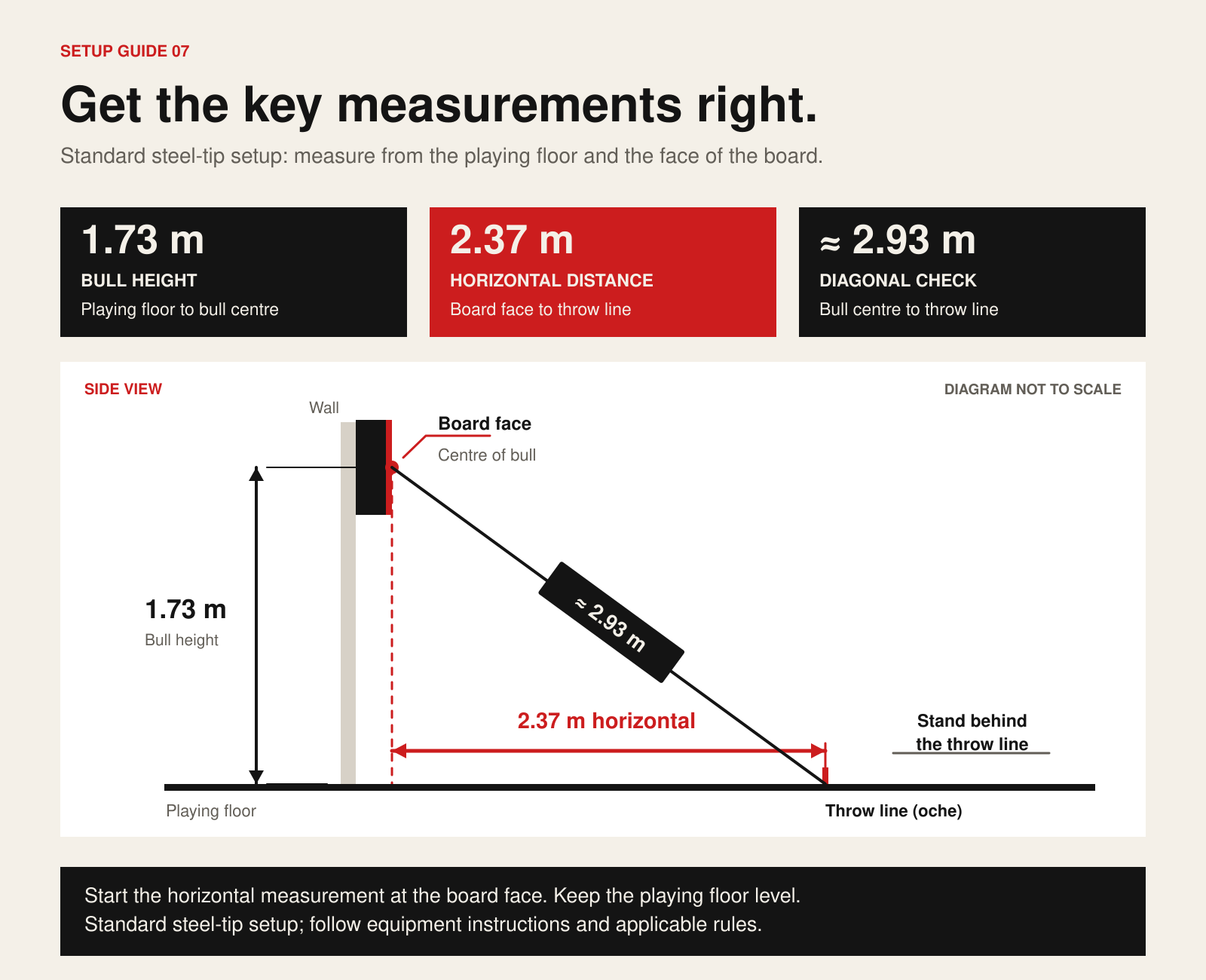
For a standard steel-tip setup, the centre of the bull is 1.73 metres above the finished playing floor. Measure to the bull centre, not the top of the board or the mounting bracket. The bracket position depends on the board’s own mounting design, so use the manufacturer’s instructions to translate that height into the correct fitting position.
Think about the finished arrangement while measuring. A planned platform or a change in floor level can affect the reference surface. Establish the playing floor first and take the height measurement vertically. Once the board is mounted, confirm the bull position again instead of relying only on the earlier bracket mark.
YOUR EQUIPMENT CHECKLIST
Measure from the board face to the throw line
The standard horizontal steel-tip throwing distance is 2.37 metres from the face of the dartboard to the throw line. The important reference is the playing face, not the wall behind it. A board, cabinet or stand projects into the room, so a measurement taken only from the wall will not describe the final playing distance correctly.
Mark the board-face position on the floor before measuring horizontally. Where a raised oche is used, follow the applicable rules for its playing edge. A diagonal measurement from the bull to the throw line is approximately 2.93 metres and can provide a useful cross-check, alongside the vertical and horizontal measurements.
Check the room beyond the measurements
The throwing distance does not describe the entire space needed for comfortable play. Allow room behind the throwing position and around the playing area, taking account of your room layout. Keep door swings and walking routes away from the line of play. Position waiting players where they will not need to cross in front of someone throwing.
Consider where spare darts, drinks and personal belongings will be placed. Keep the floor clear and avoid loose items in the throwing or retrieval area. Decide how the board will be lit and where the scoring surface will sit before completing the layout. Those practical details are easier to solve while the space is still being planned.
Match mounting equipment to the board and surface
Use the bracket, stand or other mounting equipment specified for the selected board. Check the supporting surface and the relevant fitting instructions. A wall cabinet and a free-standing support are different arrangements, and their hardware should not be treated as interchangeable. If the supporting surface or fixing method is uncertain, obtain suitable advice before fitting the equipment.
Browse dart boards alongside their model details. For an existing board, identify the model before replacing mounting parts. Confirm that the finished board is secure and positioned correctly, and recheck the arrangement if equipment is moved or the surrounding setup changes.
Plan accessories around the finished layout
A surround, cabinet, light and mat each occupy space and have their own fitting requirements. Compare their dimensions with the chosen board and room. Check how cabinet doors open and whether other accessories interfere with that movement. Do not assume that a photograph of a complete setup establishes compatibility for a different combination.
Use dartboard accessories to build a checklist, and compare packages against that list. Protection products cover their stated area; they do not remove the need for a clear playing space or appropriate supervision around sharp darts.
Mounting questions
Is the throwing distance measured from the wall?
No. For the standard steel-tip measurement described here, use the face of the board as the starting point. Account for the board’s projection into the room before marking the throw line.
Do I need to remeasure after adding a cabinet or stand?
Yes, if the change moves the board face or alters the bull height. Check the completed arrangement after any change that affects those positions. Reusing an old floor mark without checking can leave the new setup incorrectly measured.
Can I get help choosing the equipment?
Send your board model, room measurements and the accessories you are considering through the contact page. This page provides setup information and product-planning guidance. Any fitting work needs to follow the instructions and requirements for your own equipment and premises.