
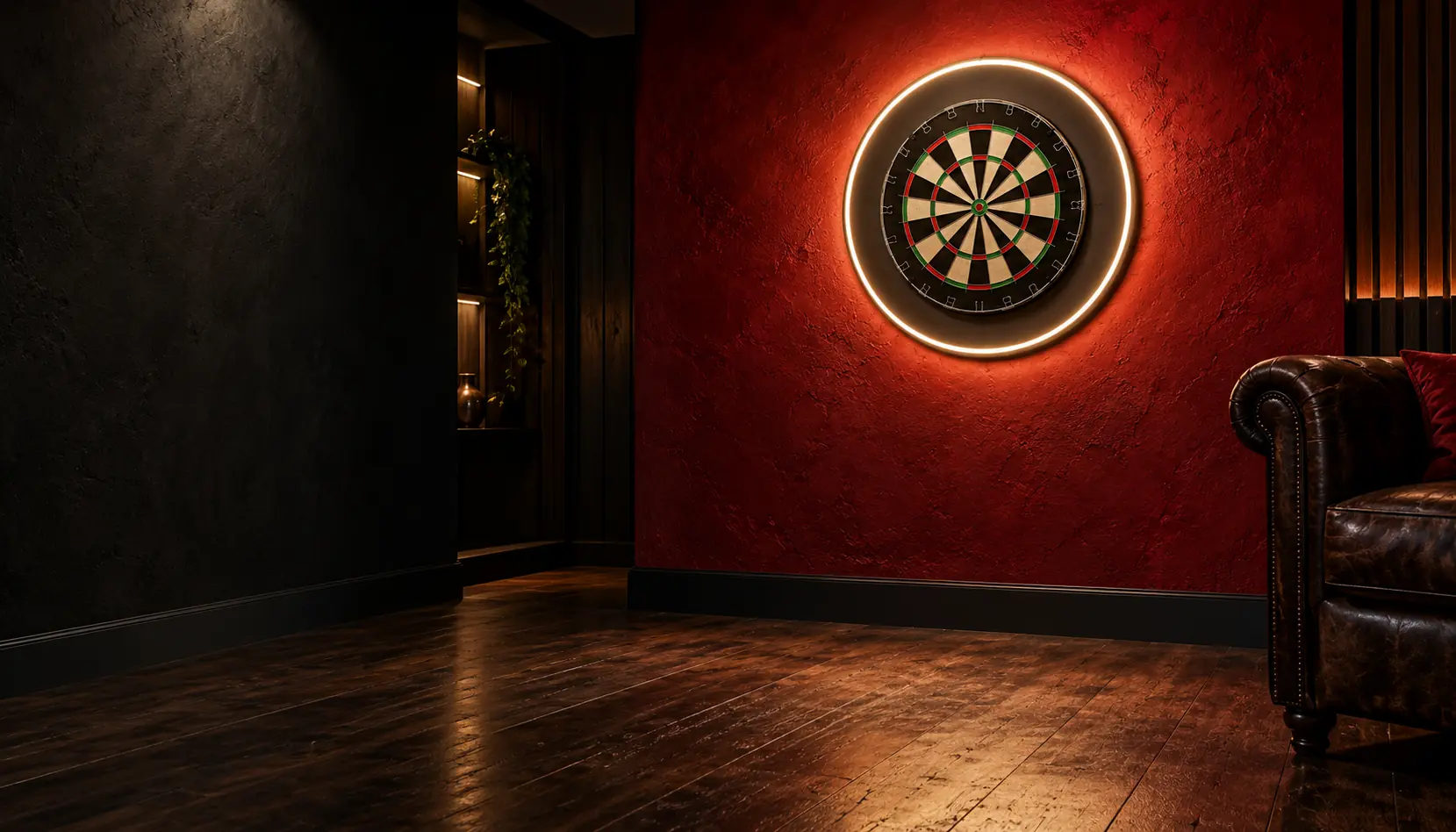
START WITH YOUR SPACE.
Choose a throwing area that can stay clear while a game is in progress. Look at doors, walkways, windows and the space behind the player as well as the wall where the board will sit. A board can fit neatly into a room while the throwing lane still conflicts with everyday movement. Measure the whole area before ordering equipment, and think about where other people will wait between turns. Keep darts stored away from children and pets when the game is finished.
GIVE THE BOARD A PROPER HOME.
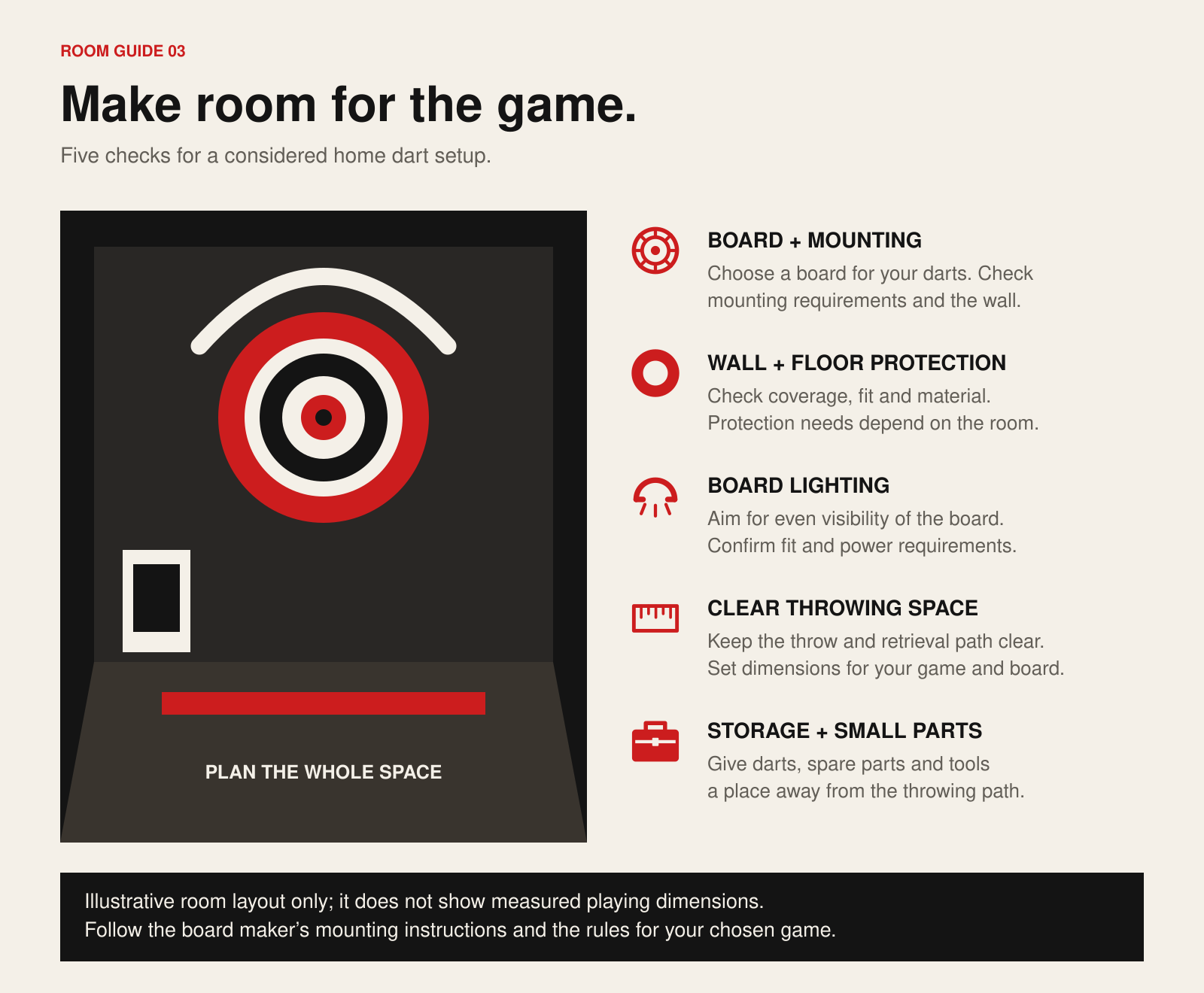
Compare the board type with the darts you intend to use. Steel-tip darts belong with an appropriate steel-tip board; electronic soft-tip equipment uses a different system. A wall-mounted board needs a suitable fixing arrangement for that wall. If permanent mounting is unsuitable, compare a compatible stand and check its footprint, stability and setup instructions. Our mounting guide explains the standard steel-tip measurements, but the manufacturer’s instructions and the actual room still need to be checked.
YOUR EQUIPMENT CHECKLIST
PROTECT THE SPACE AROUND IT.
A surround, cabinet and mat do different jobs. A surround protects part of the wall immediately around the board, while a cabinet can provide doors and storage depending on the model. A mat can help define the throwing area and provide a surface beneath the player. None of these items makes every missed dart harmless. Check the coverage, dimensions and materials against your room, and protect the wider area where an occasional stray dart could land.
MAKE THE TARGET EASY TO SEE.
Lighting should help players see the board clearly without creating distracting glare. Compare how a light attaches, whether it fits the board and surround, and where its cable and power source will sit. A lighting ring is only one possible arrangement. Check the included components and clearances rather than assuming every light fits every cabinet or stand. Plan the cable route so it stays away from feet, doors and the throwing lane.
CHOOSE THE PIECES THAT WORK TOGETHER.
A package can make it easier to compare several essentials at once. Read the full list of included items, then identify what your room still needs. Board, surround, lighting, darts and mounting hardware are not automatically included in every bundle. If you already own equipment, build around the pieces that still work for you. Record the brand and model, take photographs of important fittings and compare dimensions before choosing the next accessory.
FINISH WITH THE EVERYDAY DETAILS.
Think about where spare flights, shafts and darts will live between games. A case keeps smaller components together; a display stand has a different purpose from a freestanding dartboard support. Decide how players will keep score and whether the scoreboard can be seen comfortably from the playing area. Keep a simple reference setup when trying new flights or shafts, changing one component at a time so the effect is easier to judge.
BRING A PLAN. ASK GOOD QUESTIONS.
Before contacting the team, gather your measurements, a photograph of the room and a list of equipment you already own. Say whether the setup is permanent, portable or shared with another use of the room. Add a budget range and the main question you need answered. That context makes a product conversation much more useful than starting with a photograph alone. We can discuss the equipment range; check product availability and package contents before making a special trip.
Can I build a home dart setup in stages?
Yes. Plan the full layout first, then buy the essentials and add compatible accessories when you need them. Keeping the final plan in mind helps avoid a purchase that limits later choices.
Do you install dartboards at home?
This page helps you plan and choose equipment. It does not advertise an installation service. If you need help with wall fixings or a difficult surface, arrange an appropriately qualified installer.
What should I check before buying a package?
Compare the included items, board type, dimensions and fittings with your room and existing equipment. Ask about anything that is unclear rather than assuming the photograph shows everything supplied.